我是这样度过每一天
----向死而生-----
我是谁 之一
【原文】
The ultimate truth of who you are is not I am this or I am that, but I AM.
【译文】
我是谁?
这个问题的终极答案,不是我是这个我是那个,而是我存在。
【心得】
我们几乎每天都在回答“我是谁”这个问题,尤其是在遇到新朋友的做自我介绍时。而答案,无非是,我是清阳,我是学生,我是心理学专业的学生,我是中国人,我是留学生,我跑步,我是父母的儿子,母亲的哥哥,女友的男友... 仔细想想,这些无非是在给自己贴一个标签了事。这些标签无非是为了简化自己,以图让别人(或别人的思维)认识其我来更加容易些。这些答案都没有错,但没有一个是完全描述自己的。它们只能算部分真实,因为它们有可能是变化的。比如,在未来的某些时候,我可以不再是学生,也可能不再搞心理学,也可能成为其他国家的公民,也会从男友变成丈夫... 这些变动不居的标签,只适合某一时间和空间.
如果要用高度概括的话来涵盖所有的事实,除了这一句“我存在”更合适的了。这句话看似没有任何具体信息,其实却传达了一个非常重要的观点:我是什么并非十分重要,而是在这一刻,我存在着,作为学生,跑者,男性,儿子,哥哥,男友...等等这一切存在着。这才是根本,才是最真实也最重要的。
-
[健康] Oct. 2nd, Nuci’s SPACE 5k
I have to say Oct. 2nd was a nice day, sunny and calm. It was a little bit chilly but not bad at all. Not bad for a morning run. Actually, Freya did her 12 miles long run and I participated The 7th Annual S.P.A.C.E. Race 5K.
It was my second 5K race this year. The first one was the Athens Twilight 5K in April. It took me 20:04 to finish the 5K last time. This time I wanted something under 20 to set a new PR.
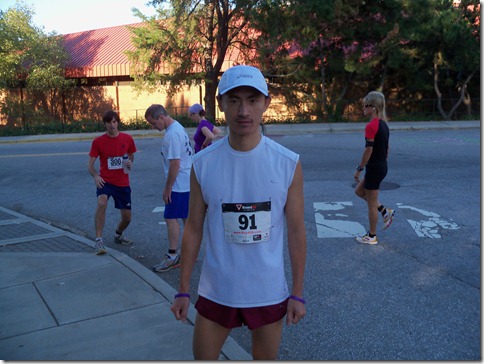
Freya’s long run ended at the start of my 5K. We planed her long run route the night before so she could finish her training and meet me at the start of the 5K to cheer for me. And of course, she took some photos. This is me before the race.
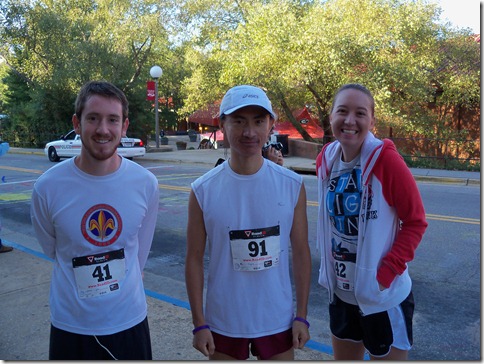
My labmates John and Lauren also ran the race. Cindy participated as a volunteer. Actually it was Cindy who informed us about the Nuci’s SPACE run.
The race started in some traditional way which I had no idea what it was. I just started running when I sensed others were moving.
 Yes, I was at the front line.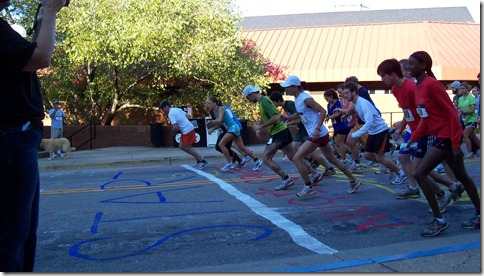
The whole run was OK. I did not feel very well. It was like lack of energy. I had the feeling that I wanted to go faster but I couldn’t because there was no fuel in the tank. Maybe I was too excited, I don’t know. All that I could do was to keep my pace, and keep going. that’s it…
This is me towards the finish. Freya took this photo and then the battery of the camera died. There was no video when I was passing the finish this time. We planned it, but did not check the battery.
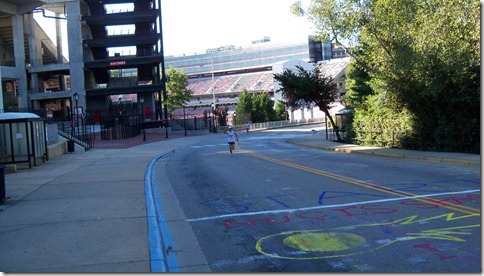
I finished the third overall. The final results were not posted yet as of now, but I finished under 20 minutes for sure. I am happy with the result.
After the race, a mild pancreatitis episode attacked me. I had to take pain medicine and stay in bed. The pain lasted about 8 hours. I don’t think the race is the cause of the attack. It probably would happen no matter what. It might have affected my performance. Yeah, I believe I could have done better.
Anyway, what has been done has been done. Training will continue. Looking forward to my next race, the Athens Half Marathon!
update: I found more photos here.
-
当下的力量 之十三
【原文】
Through the present moment, you have access to the power of life itself, that which has traditionally been called "God". As soon as you turn away from it, God ceases to be a reality in your life, and all you are left with is the mental concept of God, which some people believe in and others deny. Even belief in God is only a poor substitute for the living reality of God manifesting every moment of your life.【译文】
透过当下,你可以体验到生活自身的力量。传统上,这种力量被称为上帝。你一旦偏离当下,上帝便从你的生活中抽身而去,只留下一个上帝的概念。 变成了概念,便有人相信有人不信。这种情况下,即便是信仰上帝,也无法取代上帝真的无时不在。【心得】
是啊,如果你不在当下接触生活自身的力量,那么信它存在有如何呢。
信仰上帝存在不如使上帝存在。使上帝存在,只需着眼当下,也只有这样错,才是唯一的方式。
这些天,一直接受一种信息,那就是生活不是别的,而是你的创造。无论你做什么,你都在创造自己的生活。这种创造只发生在当下。无论你着眼于过去,还是放眼于未来,一切的改变都是在现在做出的。活在当下是有道理的,不是么?因为对过去的修正或者对未来的建设,都是透过现在发生的。将精力放在当下吧,从当下开始,创造人生。
-
当下的力量 之十二
【原文】
Your primary purpose is to enable consciousness to flow into what you do. The secondary purpose is whatever you want to achieve through the doing. Whereas the notion of purpose before was always associated with future, there is now a deeper purpose that can only be found in the present, through the denial of time.
Your secondary or outer purpose lies within the dimension of time, while your main purpose is inseparable from the Now and therefore requires the negation of time. How are they reconciled? By realizing that your entire life journey ultimately consists of the step your are taking at this moment. There is always only this one step, and you give it your fullest attention. This doesn't mean you don't know where you are going; it just means this step is primary, the destination secondary. And what you encounter at your destination once you get there depends on the quality of this one step. Another way of putting it: What the future holds for you depends on your state of consciousness now.
【译文】
人生的首要目标便是唤醒意识,使之关注行动。而行动所收获的,无论它是什么,相比之下都是次要的。以前,目标这一概念总是与未来相联系的,但现在我们知道更深层次的目标只能通过否定时间,在当下获得。
次要目标或外部目标的存在依赖于时间。而主要目标则与当下密不可分,且否定时间。这二者如何统一?这需要意识到我们的生命旅程乃是由当下迈出的每一步所构成的。当下只有这一小步,需要你对它全神贯注。 这不是说你不需要了解前进的方向,只是强调迈出当前这一步的重要性,以及终点的相对次要。在生命的终点你将遇到什么取决于当前这一步如何迈出。
换句话说:你当前的意识状态决定你的未来。
【心得】
有很多人该听过拖延症这个词(如果没听说过,去Google一下或者看一下维基百科上的词条:英文, 中文),是指人做事不拖到最后一刻不动手。在最后一刻到来之前,拖延症患者会做各种无关的事情来消磨时间。无论造成这样的病症的原因是什么,所有的拖延者都有着相同的特点:对自己当下的行为视而不见,不加引导,任凭自己在当下如失去灵魂般的做与自己需要完成的事情相差十万八千里的闲白儿。
这个过程中,个体的意识不在当下。整个人做的事情无非是让自己麻痹,不去因对未来的失败的恐惧和担忧或者对过去的失误而懊悔和抱怨。然而,恐惧与失误却一刻不会离开他们,因为他们的意识一刻也没有离开过去和未来。
解决这个问题的方法只有一个,把意识拉回到当下。在当下,不存在失败或失误,也没有担忧和懊悔存在的空间。在当下,只有一个问题:怎样行动。以行动回答这个问题,所有的问题就解决了。
把意识置于当下,是人生的首要目标。开始正确的行动,是第二位的。置于行动的结果,在我看来应该是第三位的了。
要注意到,无论意识是否是在关注当下,减轻拖延带来的焦虑的方法,都是行动。没有意识的盲目行动只是从焦虑中逃避,行为的结果常常是带来更严重的压力;有意识引导的正确行动不但减轻焦虑,更可以从根本上消除焦虑。
因此要消除拖延,就必须活在当下。
当然活在当下并不只是为了消除拖延。将意识拉回当下,关注行为,可以消除很多本不该有的压力,可以引导人们发现生活之美,之幸福。清楚了这一点,就掌握了幸福生活的钥匙。接下来,请行动吧。
-
当下的力量 之十一
【原文】
Awareness is the power that is concealed within the present moment. This is why we my also call it Presence.
The ultimate purpose of human existence, which is to say, your purpose, is to bring that power into this world.【译文】
觉醒是一种力量,封印于当下。这也是我们成觉醒为“存在”的原因。
人类,或者说你自己,存在的终极目标,就是唤醒这种力量。【心得】
作者在这里说,人类的目标是将觉醒的力量唤醒。我理解这种觉醒的力量的作用,是对宇宙,世界,自然以及自身的关注。而所有这些也都存在于当下,不是么?
曾看到一篇文章,讲到世上最浪费时间的事情(原文章在这里,值得一读)。作者列举了三件事情:第一件是担忧(worry),第二件是抱怨(blame)。这两件事情,前者是面向未来,后者是面向过去。两者共同的是,不自知的消耗当下。作者提到的另外一件,是Judgement。这个Judgement跟我们前面提到的给人和事贴标签、归类是一回事儿。这又当归因于我们的思维有限性。当然,这并不是什么通过行为统计得来的科学结论,但是道理却非常清楚。 这些事情都无益于我们的生活,因此做这些事情,是明白无误的浪费生命。
-
当下的力量 之十
【原文】
The elimination of time from your consciousness is the elimination of ego. It is the only true spiritual practice.... What we are speaking of is the elimination of psychological time, which is the egoic mind's endless preoccupation with past and future and its unwillingness to be one with life by living in alignment with the inevitable isness of the present moment.
Whenever a habitual no to life turns into a yes, whenever you allow this moment to be as it is, you dissolve time as well as ego. For the ego to survive, it must make time—— past and future——more important than the present moment.
Time is the horizontal dimension of life, the surface layer of reality. Then there is the vertical dimension of depth, accessible to you only through the portal of the present moment.
【译文】
有意识的放弃时间的概念就是要放弃自我。这是唯一真正的灵修...我们这里所指的是放弃心理上的时间,是指自我用过去和未来无休止的占据思维,而拒绝与生命统一,拒绝承认或者活在当下。
当习惯性的拒绝变成接受,当你承认当下时刻的本来面目,你就消解了时间和自我。自我通过强调时间的重要性才得以存在,它尤其是强调过去与未来的重要性高于当下。
时间是生命的水平维度,是现实的表象。生活还有一个具有深度的垂直维度,只有在当下才能遇见进入这一维度的大门。
【心得】
会生活的人,不但关心自己能活多久,更关心自己的生活质量。
寿命,是以时间度量的生命。虽然活到很大的年纪引人羡慕,但是生活品质,或者这里提到的深度不够,那么生命的意义便平凡许多。
生命的深度的发掘与生命长度的探索,两相并不违背。一种关注肉体存在,一种关注心灵成长。两相应当平衡:因为,具有深度的生命,其存在更值得延长。
-
当下的力量 之九
【原文】
The most important, the primordial relationship in your life is your relationship with the Now, or rather with whatever form the Now takes, that is to say, what is or what happens. If your relationship with the Now is dysfunctional, that dysfunction will be reflected in every relationship and every situation you encounter. The ego could be defined simply in this way: a dysfunctional relationship with the present moment. It is at this moment that you can decide what kind of relationship you want to have with the present moment.
“Do I want the present moment to be my friend or my enemy?" The present moment is inseparable from life, so you are really deciding what kind of relationship you want to have with life. Once you have decided you want the present to be your friend, it is up to you to make the first move: Become friendly toward it, welcome it no mater in what disguise it comes, and soon you will see the results. Life becomes friendly toward you: people become helpful, circumstances cooperative. One decision changes our entire reality. But that one decision you have to make again and again and again—— until it becomes natural to live in such a way.
【译文】
人一生之中所处的各种关系之中,最重要的最根本的不是与当下所采用的形式的关系而是与当下的关系。换句话说,与任何与任何事物的关系都不如如当下的关系重要。如果你与当下的关系处理得不好,这将会影响你与所有事物与情境的关系。我们可以这样定义自我【ego】:与当下关系的一种不良状态。而现在,你就可以决定与当下保持怎样的关系。
“我想要当下成为朋友还是敌人?” 当下与生活是不可分割的,因此当你问自己这个问题是,你实际上是在决定与生活保持怎样的关系。若你决定与当下做朋友,就应该首先采取行动,主动示好,无论它以何种表象出现,都敞开胸怀欢迎它。然后,你会很快看到变化:生活也会向你示好,各种境况开始帮助你。这个决定改变了我们的整个现实。不过,你得一而在,再而三的做同样的决定,直到这成为你自然而然的行为方式。
【心得】
与当下做朋友,关键是要有一种接受一切的胸怀。对所有的事物都采取一种理解与包容的态度,就是拥有了自然的情怀。自然与宇宙无所不包,我们要与自然为友自然就要无所不容。没有了敌人,没有了反对物,也就没有障碍,一切将会顺利起来。
-
当下的力量 之八
【原文】
People believe themselves to be dependent on what happens for their happiness, that is to say, dependent on form. They don't realize that what happens is the most unstable thing in the universe. It changes constantly. They look upon the present moment as either marred by something that has happened and shouldn't have or as deficient because of something that has not happened but should have. And so they miss the deeper perfection that is inherent in life itself, a perfection that is always already here, that lies beyond what is happening or not happening, beyond form.
Accept the present moment and find the perfection that is deeper than any form and untouched by time.【译文】
人们通常认为自己的幸福有赖于外在发生的事件,或者说有赖于“形态”。他们却不知道这些正在发生的时间是宇宙中最不稳定的东西,变动不居。他们认为当下要么是被本不该发生的事情弄得一塌糊涂,要么是因为本该发生事情没发生而先天不足。因此,他们不懂得深度完美是生活本身所固有的,一直存在着。这种完美超越了发生或未发生的事情,也超越所有“形态”。
接受当下,体验深度完美。完美不为形态或时间所左右。【心得】
时间易逝。
所有依赖于时间的事物同样如此。
这一秒与上一秒和下一秒,从形态上讲都是不同的。相同的是,他们都曾经,正在或者将要出现于当下。接受当下,也就接受了过去,也默认接受了未来。从这一点上讲,接受当下并不会使我们失去任何东西。
接受当下,就不会被自己的幻想与幻觉所蒙蔽。当下是怎样的就是怎样的。试图为当下寻找解释寻找原因的努力只是浪费时间——事物是普遍联系的。这种寻找往往以抱怨当下而告终:是啊,当下太不完美了,因为找不到完美的解释。岂不知,我们的思维所认为的完美,无非是一种对自然对宇宙的试图简化。然为简化为完美,当然离真实完美背道而驰。真正的完美,深度完美无需思维来解构。真正一团糟糕或者先天不足的正是思维本身。接受当下,观察当下。完美就在其中,完美就是当下本身。
-
当下的力量 之七
【原文】
There are three ways in which the ego will treat the present moment: as a means to an end, as an obstacle, or as an enemy.
When you react against the form that Life takes at this moment, when you treat the Now as a means, an obstacle, or an enemy, you strengthen your own form identity, the ego. Hence the ego's reactivity. What is reactivity? Becoming addicted to reaction. The more reactive you are, the more entangled you become with form. The more identified with form, the stronger the ego. Your Being then does not shine through form anymore -- or only barely.
【译文】
自我通常将当下时刻视为障碍,敌人或是通往终结的手段。
当你逆生活在当下的形态而动,或者将当下视当下为手段、障碍或敌人时,就是在增强你自身的身份的形态——即自我。同时也增强了自我的反应性。这反应性是什么?就是对反应的沉溺。你越是反应积极,就越同形态上的东西纠结一处。越是认同形态,自我就越强大。直到你的存在之光很难再穿透各种形态的包围。
【心得】
这一段要同 当下的力量 之四 一起来看才容易看懂。
所有存在着的事物都是当下的形态。这些形态与自我(ego)是格格不入的。自我视他们为敌人,为障碍,为手段。如果我们与自我站在一边儿,以同样的眼光看待这些形态,我们就会被自我所蒙蔽,收到自我的摆布。要知道,自我并不是真实的存在,而是真实的“我”在思维中的反映。思维又是简单的,非自然的,主观的且充满谬误的。因此,如果我们站在自我一边,并站在当下的对立面,就一定会迷失在自我的迷雾中。
-
当下的力量 之六
【原文】
Whenever you become anxious or stressed, outer purpose has taken over, and you lost sight of your inner purpose. You have forgotten that your state of consciousness is primary, all else secondary.
Why do anxiety, stress, or negativity arise? Because you turned away from the present moment. And why did you do that? You thought something else was more important. You forgot your main purpose. One small error, one misperception, creates a world of suffering.
【I文】
当你紧张或者焦虑时,你是受到外在信念的控制。你忽略了内在目标,忘记了自己的意识状态是第一位的,其他的都是第二位的。
为什么焦虑、紧张或者消极态度会出现?因为你背弃了当下时刻。你为什么要这么做呢?因为你忽略了自己的主要目标,反而认为其他的事情更重要。这样一个小过失,一个小误解,带来无尽的痛苦。
【心得】
如果我们把注意力放在当下,就不会产生各种无谓的痛苦了。人们确实很少对当下的事情焦虑和紧张。焦虑和紧张多半来自于对于未知的未来的恐惧。当事情真正的发生时,我们没有精力来紧张或者焦虑,我们所有的的精力都放在了当前的行动上才可能解决问题。
如果注意力都被放在过去与未来,而不是用来指导在当下的行动,那么走错路,甚至掉到陷阱中这样的事都是难免的。
至于为什么说内在意识状态是第一位的,这里先不说,以后会提到。


