我是这样度过每一天
----向死而生-----
折返点1826 | 你好七月
七月份,美国国庆将至。 大家都在找空闲休假,加上同楼层的其他组换办公楼,我们这一层忽然就冷清起来。 我们的组经过改组,也精简了许多,变成了纯粹的研究组,其他的supporting组,全都换到了其他人的麾下...
-
新爸五年计划 | 054 喊爸爸

手机上装了一个App,用来提醒自己,记录一下当天发生的值得感激的事情。设置的提醒时刻,是每天的下午下班前。
一连几天看到提醒,都是手指一划,让它滚一边儿去。一睁眼,就收拾收拾上班,到下午已经累得恨不得马上睡觉了,哪有什么值得感激,感恩的小确幸。
回到家,也不能就放松了。妻带了一天孩子,都腾不出手来干别的。于是我看孩子,她做饭,然后一块儿吃饭。吃完饭,孩子洗澡,刷牙,穿睡衣,讲故事,哄睡,一套规定动作下来,就会两三个小时后了。
虽然是每天都重复的规定动作,也很少像体操运动员奥运比赛时那样,完成的漂亮而优美。一个礼拜总有那么几天,是要听着小的哭两声,才算过一天的。不过,值得感恩的事儿,也往往发生在这普通的平淡的日子里。
-
HCI笔记 | Week 07 Task Analysis And Distributed Cognition
This week, you should watch lessons 2.7 Task Analysis and 2.8 Distributed Cognition.
2.7 Task Analysis

- The task is at the heart of HCI: Look at the tasks now and restructure tasks to be more efficient using new interfaces.
Two methods for task analysis.
- Human information processor models (the GOMS Model): focuses on the input to the user and the output from the user and takes the processor model of the user.
- Cognitive task analysis: Tries to get inside the users head takes the predictor model of the user
-
折返点-1825---第900天
2018年6月18日,是我持续跑步的第900天...
-
新爸五年计划 | 053 Laura Markham的两本书

前几天与同事聊天,提到读书提高自己。
我们部门的总监,总会在组会的时候提起一些对他有帮助的书籍,多数是职场和领导力类的。
我们发现,其实彼此平时并没有太多的时间都这些书。而这些书,多数时候也同励志书籍一样,当时读着觉得醍醐灌顶,很有启发。但是一旦放下,几天之内就在繁忙工作中忘记了那些有用的原则,观点,方法。
-
HCI 笔记 | Week 06 Prototyping
3.5 Prototyping
introduction:
Prototyping: making things we can put in front of users, get user feedback as quickly and rapidly as possible, and build up more sophisticated prototypes over time as we go through the design life cycle. Start with low fidelity prototypes (things that can be assembled and revised very quickly for rapid feedback from users) and work our way towards higher fidelity prototypes (wireframes or working versions of our interface).
Basics of Prototyping
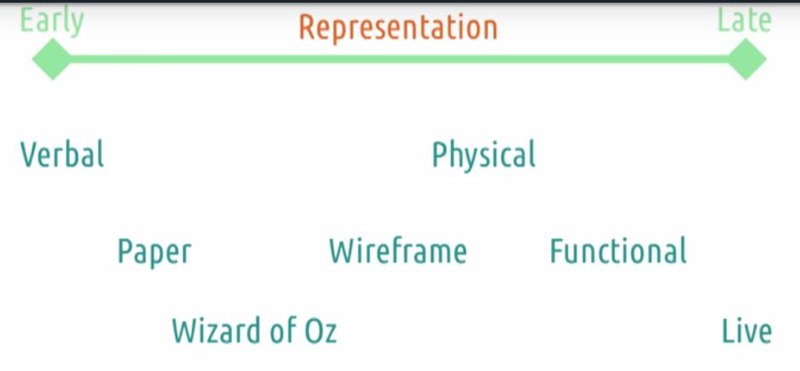 representation: the form that prototyping takes
-
折返点-1824 | 脚的护理
这一个星期,都在跟脚后跟开裂做斗争。 其实从上周末开始,就开始觉得叫不对劲。两只脚的脚后跟都开始疼...
-
HCI笔记 | Week 03 Direct Manipulation and Human Abilities
OMS CS6750: Human-Computer Interaction – Summer 2018 笔记
Week 03: lessons 2.3 and 2.4 Human Abilities
2.3 Direct Manipulation
Introduction to Direct Manipulation and Invisible Interfaces
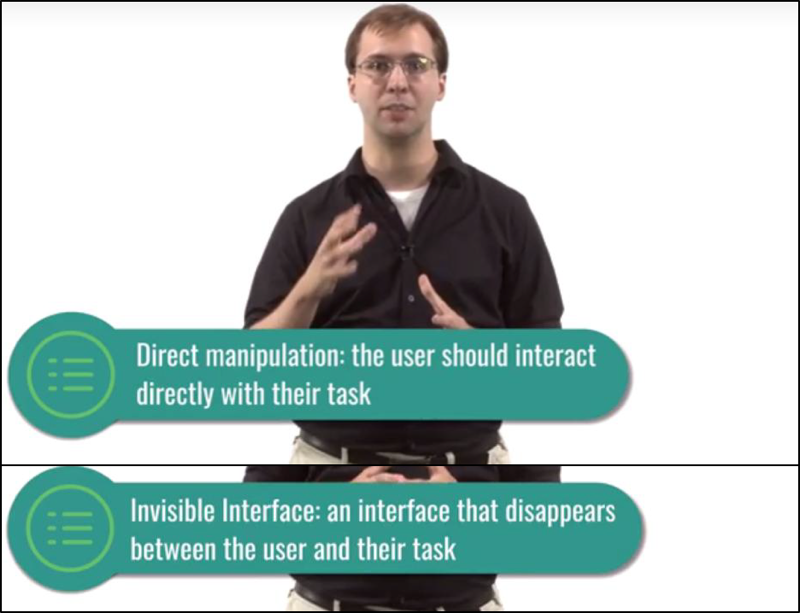
Direct manipulation and invisible interfaces are two applications of good feedback cycles.
- Direct manipulation: the user should feel as much as possible like they’re directly controlling the object of their task.
- At their best, the interface actually disappears
-
HCI笔记 | Week-05 Design Principles and Mental Models
Lessons 2.5 Design Principles and Heuristics and 2.6 Mental Models and Representations
2.5: Design Principles and Heuristics
Introduction to Design Principles
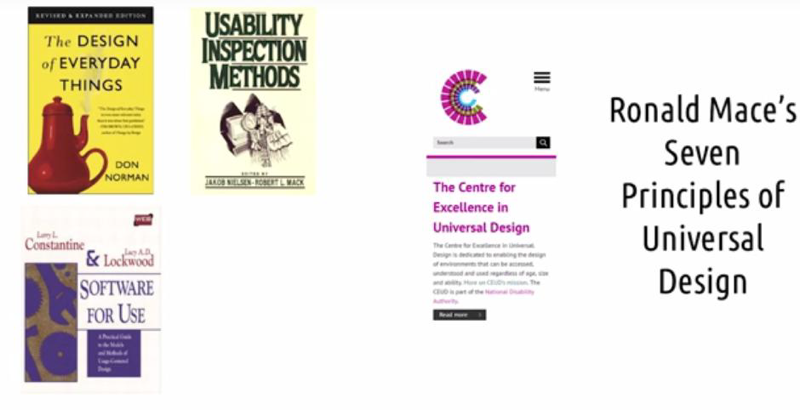
In this lesson, we will discuss 15 design principles and heuristics based on four sets of design principles:
- Don Norman’s six principles of design.
- Larry Constantine and Lucy Lockwood’s principles of user interface design,
- Jacob Nielsen’s Ten Heuristics for user interface design (for both design and evaluation).
- Ronald Mace’s Seven principles called Principles of Universal Design.
-
HCI 笔记 | Week 04 Design Alternatives
- 3.4 Design Alternatives
Lesson 3.4:Design Alternatives
3.4 Design Alternatives
Introduction to Design Alternatives
The second phase of the design life cycle is “design alternatives”. In this phase, we start to brainstorm how to accomplish the task we’ve been investigating. It involves 1) generating ideas for designs and 2) exploring those ideas to decide which one(s) to pursue.
The Second Biggest Mistake
- The biggest mistake: jumping straight to designing an interface without understanding the users or understanding the task.
- The second biggest mistake: settling on a single design idea or a single genre of design ideas too early.
The bottom line is to explore all the design ideas thoroughly before going forward with the design.
The Design Space
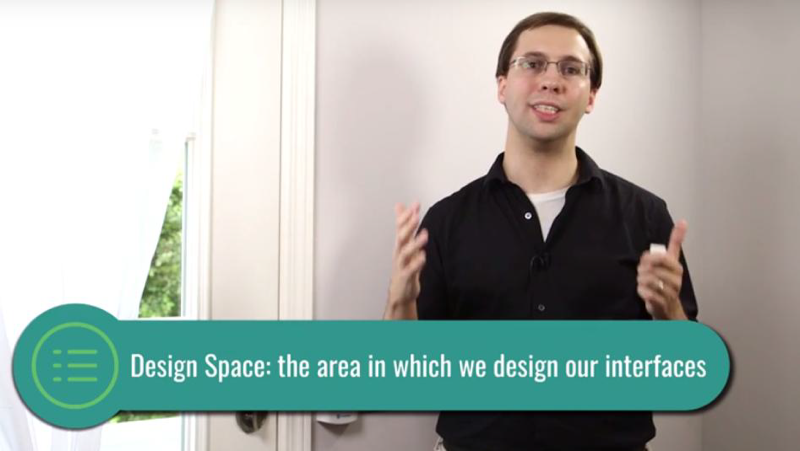
- the design space is the area in which we design our solutions to a given problem
- the space of possible ideas might expand during the design process
Individual Brainstorming
- The goal of brainstorming is to generate a lot of ideas.
- Research shows Individual brainstorming (IB) is better than group brainstormings (GB) because IB can focus on idea generating while GB tends to coalesce around ideas.
Flow: start out individually -> Generate a lot of ideas -> Don’t judge, Write down everything.
5 Tips: Individual Brainstorming
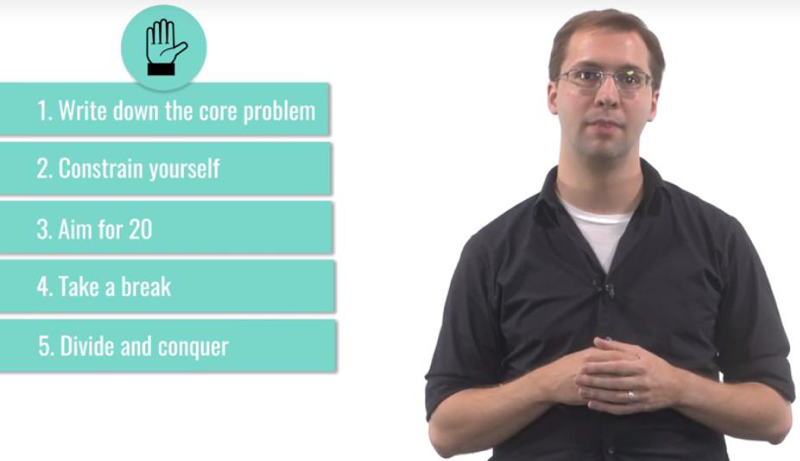
- write down the core problem. Keep this visible.
- Constrain yourself. try to generate ideas for as many scenarios as possible.
- Aim for 20. This forces you to think through the problem.
- Take a break. Let the brain works subconsciously.
- Divide and conquer. Divide big problems into smaller problems and brainstorm solutions to those.
Challenges in Group Brainstorming
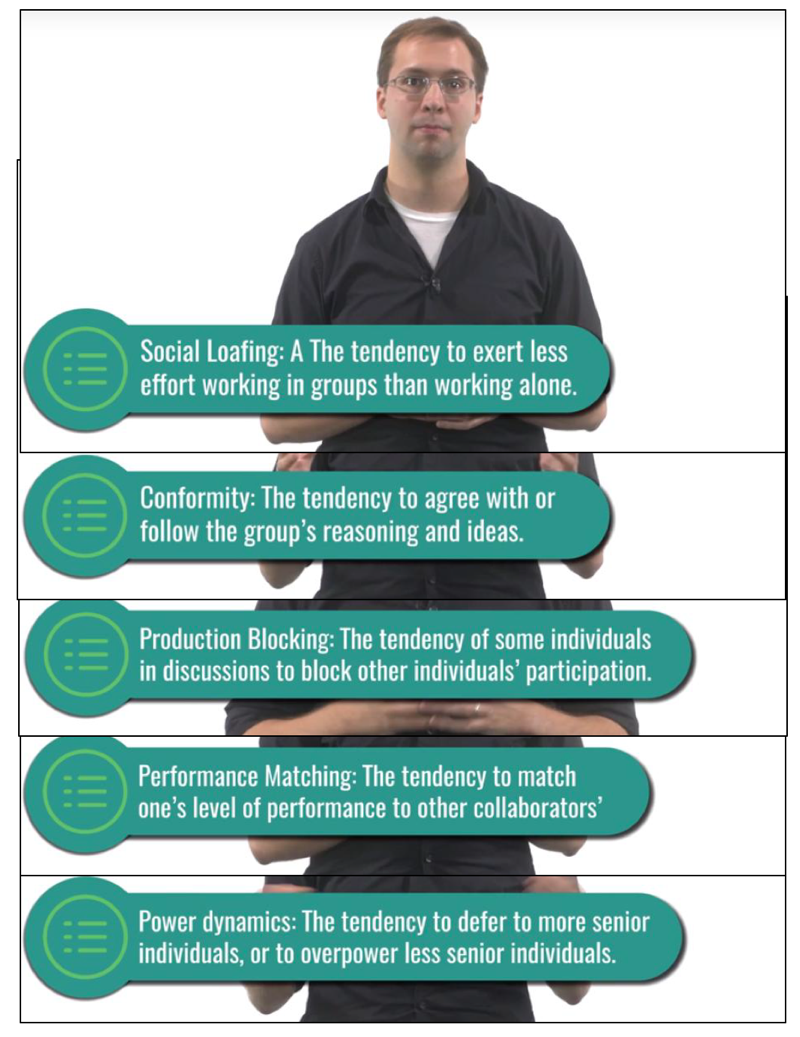
- social loafing. People often don’t tend to work as hard in groups as they would individually.
- conformity, people in groups tend to want to agree. This is against the goal of brainstorming (diversion thinking, lots of ideas)
- production blocking. In group brainstorming, dominant individuals might block others’ participation.
- Performance matching. People tend to converge in terms of passion and performance, which can lead to a loss of momentum over time.
- power dynamics or biases affect the brainstorming process.
Rules for Group Brainstorming
1957, Osbourne’s rules:
- Expressiveness. Any idea that comes to mind, share it out loud, no matter how strange
- nonevaluation. No criticizing ideas, no evaluating the ideas themselves yet.
- quantity. Brainstorming as many as possible.
- building. Try to build on ideas to generate more strong ideas.
Oxley, Dzindolet and Paulus (1996) presented four additional rules.
- Stay focused. Keep the goal in mind at all times.
- no explaining ideas. Say the idea and move on. No justifying ideas.
- when you hit a roadblock, revisit the problem. Say it again out loud.
- encourage others. Give everyone changes to speak up.
5 Tips: Group Brainstorming
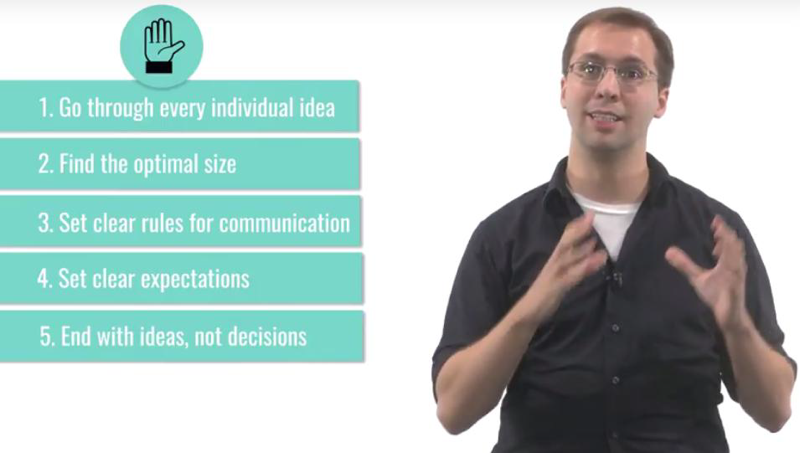
- go through every individual idea. individual brainstorming ahead of time and bring ideas to the group brainstorming session.
- Find the optimal size. five people.
- Set clear rules for communication. Get a 20-second timer and when someone starts talking, start it.
- Set clear expectations. 1) set the session to go a certain amount of time or 2)dictate that a certain number of ideas must get generated.
- End with ideas, not decisions.
Fleshing Out Ideas
Personas
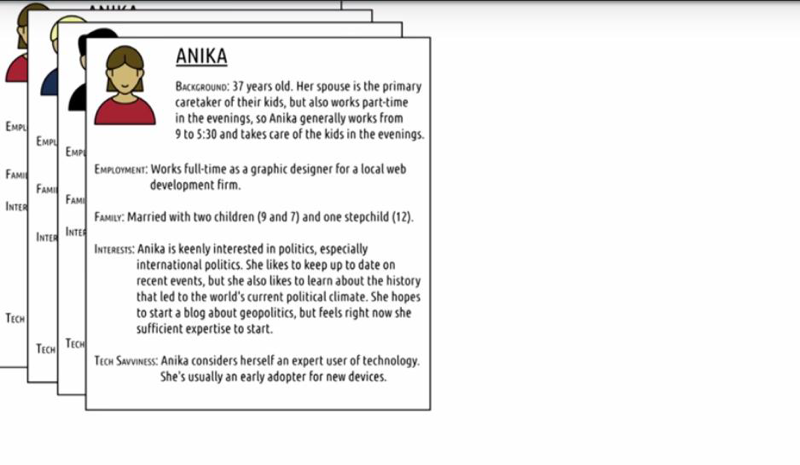
- With personas we create actual characters to represent our users.
- We want to be able to mentally simulate her for the tasks
- create at least three ~ four or more of these different personas representing different elements of our designs, different elements of our task.
User Profiles
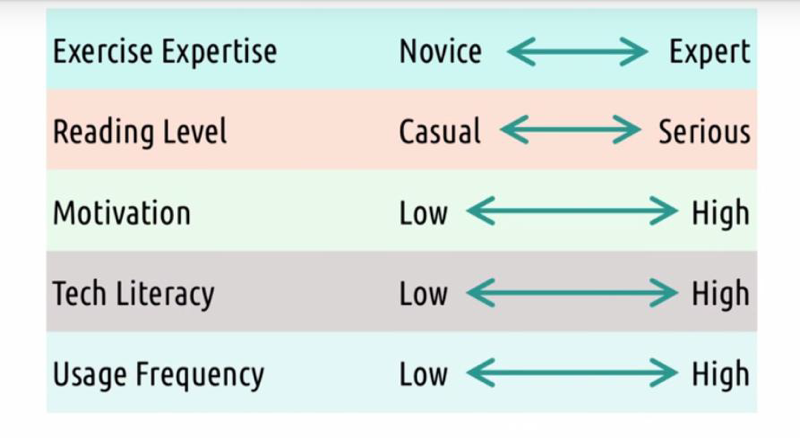
- a large number of user profiles can help to explore the full design space.
- user profiles are defined by a number of different variables about our users
- User profiles help designers to understand users groups, and to what profiles they designing for.
- common mistakes: have no users in mind in design or try to design for everyone (not feasible)
Timeline
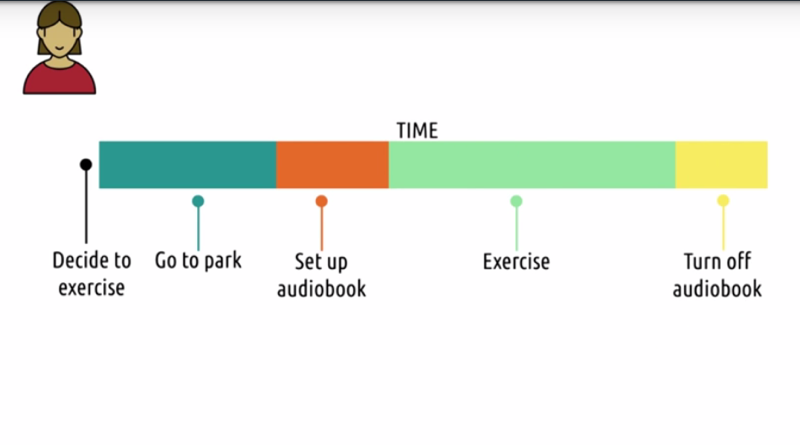
Building on the idea of a persona, we can take that person and stretch her out over time and understand (What is she thinking, what is she doing at various stages of interacting with our interface or interacting with the task at hand).
Scenarios and Storyboards
- Scenarios let us discuss specific kinds of interactions and events that we want to be able to handle
- Scenarios and storyboards are more specific than timeline: They’re about a particular person interacting in a particular way, with particular events coming up.
User Modeling
User models are more objective and meant to give us a measurable and comparable view of the user experience.
- So ideally, the result of this kind of analysis is we would be able to say that the different alternatives have these different phases and these different phases have different efficiencies or different speeds associated with them.
Quiz
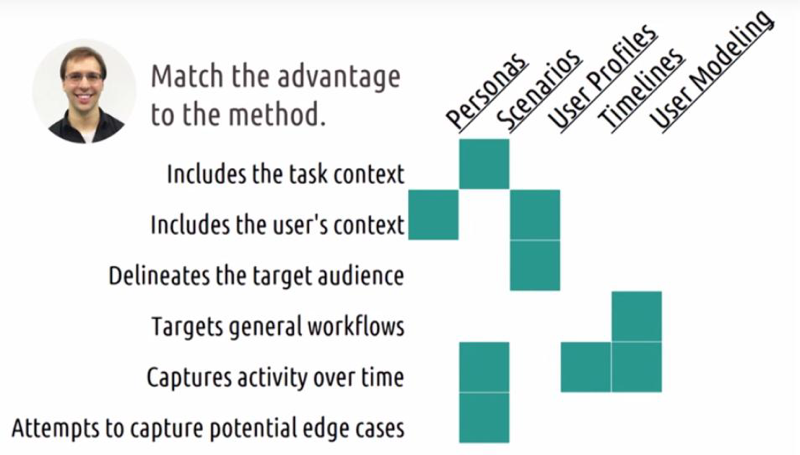
Exploring Ideas
- Rule out any of the ideas that are just technologically unfeasible.
- Rule out the options that are unfeasible for some more practical reasons.
- Create some timelines, covering a sequence of events in exercising to use to explore these alternatives further. I
- use my user persona’s to explore the cognitive load of the users in these different alternatives.
- have three design alternatives to exploring or prototyping stage.
2018-06-18 初稿